
Billions of people Observe holy days that were never meant to be holy!
Did you know: The word holiday came from the Old English word hāligdæg (hālig “holy” + dæg “day”). Two words when placed together reveals a special religious day.
(Excavating hidden facts and other pertinent information)
Here we will reveal ancient pagan practices that evolved into massive (hāligdæg) holy-day rituals. This particular day, currently celebrated as Christmas, December 25th originated from ancient pagan traditions. Nothing of this observance is Biblical. This holy-day was never, ever approved by the ONE TRUE GOD.
This blog was not intended for all people. Some may be offended by it’s content. Please note that the purpose of this blog was not to offend but to enlighten those curious as to why people continue to engage in these ancient traditions. We are not here to belittle or stigmatizing any group or person. This blog was created as an informational research tool and is meant for discovery purposes only.

The Yule, is more than just a log!
The Yule was a widely recognized 12-day celebration previously performed by pagans around 1475 CE. It was a 12-day Winter Solstice celebration which began on the eve of the winter solstice, (December 21st) and ended around the New Year. Because this was such an important ritual for pagans, Christians decided to integrate many of the Old Norse mythological customs into their own religious practices. Celebrating it as the 12 Days of Christmas.
Remember GOD is SPIRIT and we must worship HIM not by physical means but in Spirit and in Truth!
John 4: 23-24 But the hour is coming, and is now here, when the true worshipers will worship the Father in spirit and truth, for the Father is seeking such people to worship him.
God is spirit, and those who worship him must worship in spirit and truth.”
Yule Tide
The Yule was first celebrated around the fifth century by Germanic tribes as a mid-winter festival. Farmers and local residents would assemble together in a pagan temple, bringing food, ale, and livestock to be sacrificed to their Norse gods.
Did you know: for Wiccans, Yule is the second sabbat of the Wheel of the Year, marked with rituals to welcome the return of the Sun.
The Winter Solstice
The Winter Solstice, happens on the shortest day and the longest night of the year, December 21st. If you count from December 21st until New Years day you will count 12 days in all (the Twelve Days of Christmas).
In Norwegian, Swedish and Danish it is jul; joulud in Estonian; joulu in Finnish; and jol in Icelandic. The Scot’s still refer to it as Yule.
Yuletide – refers to an ancient Germanic/Norse midwinter festival celebrating the winter solstice, symbolizing the death of the old year and the rebirth of the sun.
Pagan customs connected to the “Winter Solstice.”
The Winter Solstice has been revered across cultures for thousands of years, and many ancient civilizations saw it as an favorable time for renewal and rebirth. The ancient Sumerians, one of the earliest known civilizations, celebrated the Solstice as the death and rebirth of the Sun god Shamash.
Shamash was the planet Saturn, the astronomical text say. In archaic copies of Plato’s Timaeus, the word for the planet Saturn is Helios, the “sun” god.
In ancient Egyptian civilization, people decorated their homes with palm branches during the winter solstice celebrations. This was a symbol of the victory of life over death and the return of fertility to the earth. The Egyptians believed that evergreen trees (today referred to as the Christmas tree) represented the embodiment of eternal life.
Did you know: Neolithic monuments, such as Newgrange in Ireland and Maeshowe in Scotland, are aligned with sunrise on the winter solstice.
Aside from Christianity, other spiritual celebrations influenced the development of Christmas as we recognize it today. In the 3rd century AD, Romans celebrated the pagan festival of Sol Invictus – translated from Latin as ‘the rebirth of the unconquered sun’ – on the 25th of December.
Pagan Customs Connected To The Yule…
According to Wikipedia, scholars connect the original Yule celebrations to the Wild Hunt, the god Odin, and a Anglo-Saxon celebration known as Modraniht or Mothers’ Night.
Mōdraniht or Modranicht (pronounced [ˈmoːdrɑniçt]; Old English for “Night of the Mothers” or “Mothers’ Night”) was an event held at what is celebrated today as Christmas Eve. It has been suggested by many that sacrifices were made.
According to A. Sutherland – in the Ancient pages.com – the article, “Disir: Elusive Female Guardian Spirits Of Fate And Harbingers Of Death And War”
Some believe the Disir (Valkyries) in Norse mythology were malicious, harmful spirits, demons of death, destruction, and war who sought terrible things for the people they watched.
Valkyries were one of the many deities celebrated during this festive pagan holiday. They were similar to Keres in Greek mythology. Female spirits who guided the souls of the dead into the afterlife.
In Norse mythology, Valkyries were female warriors who decided the fate of fallen warriors (fighters who fell in battle). According to the myth, Valkyries, a name meaning “chooser of the slain,” selected the warriors who would die in battle and guided their souls to Valhalla, the hall of fallen heroes. “The feast of the Valkyries” was celebrated on the 11th night of Yule, (New Years Eve).
“Mother’s Night”
an ancient Anglo-Saxon and Germanic tradition, celebrated on the eve of the Winter Solstice (around December 20th), dedicated to honoring ancestral and divine mothers, goddesses, and the protective, nurturing feminine forces that sustain life, often involving quiet rituals like lighting candles, offering thanks to the new year, and acknowledging cycles of life and death while honoring female ancestors.
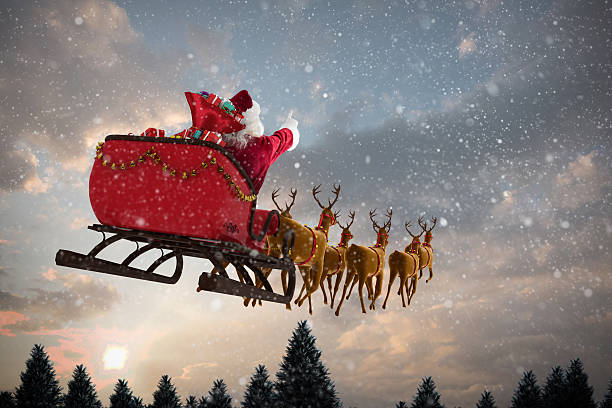
Who is this?
Odin rode the skies on a white horse with eight legs that was called Sleipnir. Especially around the winter solstice, he did so followed by his loyal helpers, the Valkyrie.
The ritual of the Yule log was symbolic of releasing the past; a disposing of old negative energy to be connected to the past year. Many ancient people believed this ritual blocked negative energy from entering into the new year.

One of the most infamous figures connected to this Yule ritual was Odin, a Norse god of war, who was worshiped in the past, by Greeks as Hermes, Romans as Mercury and later merged into Norse mythology by ancient Germanic tribes. Many believed that the Romans linked Odin (Woden/Wotan) to Mercury due to shared traits such as they both were messengers, guides for souls, shape-shifters, and of course, their association with magic/wisdom, leading to the creation of “Wednesday” (Woden’s Day) their shared day.
For his followers, Odin was definitely a major trickster figure, known for cunning, deception, and acquiring things through sly means, similar to theft, but his main domains were, war, magic, poetry and death. He was the god of wealth, commerce, fertility, and thievery.
The Origin of Santa Claus and Christmas trees!
1st Kings 14:23 They also set up for themselves high places, sacred stones and Asherah poles on every high hill and under every spreading tree.

From which mythological character did Santa Claus derive? Are any of the stories real or is he just another distortion of many other saintly characters?
As time progressed, so did the remarkable tales of this unrealistic hero. People naturally became more, and more enamored with this fellow, who traveled the world spreading joy, and Christmas cheer. A man believed to be a pious soul, giving gifts of toys and other small trinkets to poor and needy children. A man known in the past as Sint Nikolaas.
Sint Nikolaas
Most children, from an early age, were taught (brainwashed) into accepting the man known as, ‘Jolly Ole Saint Nick,’ or Santa Claus. A man whose story began as an ancient monk, Sint Nikolaas. He was believed to have been born around 280 CE. and died on December 6 343. Today he has become a legend.
It was said that Sint Nikolaas gave away all of his inherited wealth, and traveled throughout the countryside helping the poor, the sick and the needy. One of the stories claim that he saved three poor sisters from being sold into prostitution by their own father, by providing a dowry (throwing three coins down the chimney). This allowed them the privilege, through money, to marry. He was also said to have been in attendance at the first council of Nicaea in 325 CE. Also as a renown Christian, he was said to have been persecuted by the evil Roman Emperor, Diocletian.
Other early tales embellish him as calming a storm at sea, saving three innocent soldiers from wrongful execution, and well, you get the picture.
With all this protecting, saving, gift giving, and personal suffering, he soon became extremely popular. People revered him as the protector of children and sailors. His feast day is still commemorated on the anniversary of his death, December 6.
As early Europeans begin to move into new territories the story of Sint Nikolaas (Santa Claus) began to spread. He eventually became the patron saint of Russia and Greece; of charitable fraternities and guilds; of children, sailors, unmarried girls, merchants, and pawnbrokers; in cities such as Fribourg, and other cities in Switzerland, and Moscow.
Thousands of European churches were dedicated to him; one, church in particular, built by the Roman emperor Justinian I at Constantinople (today Istanbul), was built to commemorate St Nicholas (Sint Nikolaas) of Myra, the historical inspiration for Santa Claus.
The miracles of Sint Nikolaas were a favorite subject for medieval artists, and story tellers. His tales were later portrayed for audiences in liturgical plays.
The beloved nickname used by the Dutch; Sint Nikolaas eventually became Saint Nicholas.
Jolly “Old Nick” (that Old Devil)
Did you know: A widely accepted linguistic theory, “Nick” (Old Nick) derived from a German or Scandinavian term for water spirit; Nix (Nixie) in German folklore were water spirits. Necken – in Scandinavian mythology, the Nack (or Necken) was a malevolent spirit that lived in the water.
John Pintard, a member of the New York Historical Society here in America, began to distribute woodcuts (small idols) of St. Nicolas at the society’s annual meeting. In 1809, Washington Irving helped to popularize the Sinter Klaas stories in the U.S. when he referred to St Nick as the patron saint to New York in his book, “The History of New York.”
Revelation 9:20 The rest of mankind who were not killed by these plagues still did not repent of the work of their hands; they did not stop worshiping demons, and idols of gold, silver, bronze, stone and wood—idols that cannot see or hear or walk.
Have you ever wondered why trees are decorated at Christmas-time?
Jeremiah 10: 2-3 For the practices of the people are worthless; they cut a tree out of the forest, and a craftsman shapes it with a chisel. They adorn it with silver and gold; they fasten it with hammer and nails so it will not totter.
In the past, the decorating of evergreen trees was performed as a part of Tammuz (Baal) worship, a pagan god, worshiped as a Sun-god by ancient Babylonians.
Jeremiah 10:3-4 The religion of these peoples is nothing but smoke. An idol is nothing but a tree chopped down, then shaped by a woodsman’s ax. They trim it with tinsel and balls, use hammer and nails to keep it upright. It’s like a scarecrow in a cabbage patch— it can’t talk!
It is so strange how we continue in these wicked traditions; traditions GOD HIMSELF hated and condemned multiple times in print.
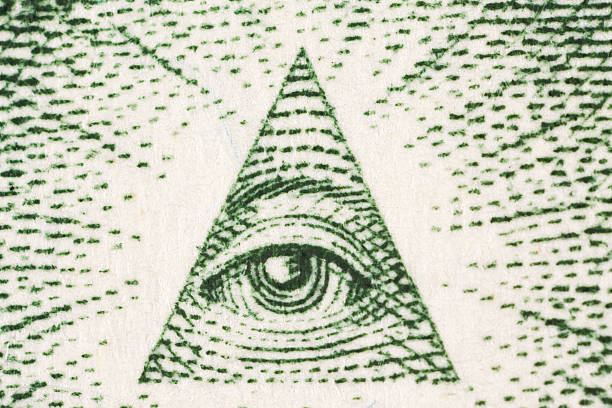
Did you know: Odin was strongly connected to concepts related to “providence,” especially through his pursuit of wisdom, knowledge, and foresight (Odin’s eye), which parallels divine watchfulness, though the modern “Eye of Providence” symbol (All-Seeing Eye) is a religious symbol connected to Egyptians and later Christians, distinct from but echoing Norse themes of all-seeing deities. His association with the Wild Hunt also links him to judgment and fate, similar to how Providence guides events.
Odin: Lord of the frenzy; leader of the possessed!!
But, before there was Sint Nikolass, there was Odin, known to his worshipers as Aldingautr (or All-father), Arnhöfði (“eagle-head”), and Auðun (“wealth–friend”). It was believe that Odin flew around on December specifically to head up the Wild Hunt for the Yuletide. He knew who had been bad or good and hunted for those who he deemed deserving of punishment. He also had a eight-legged horse, named Sleipnir.
Did you know: originally Santa had eight reindeer?
Did you also know: The names “Sleipnir” and “sleigh” are closely related and share a common linguistic ancestor? Both are “Old Norse,” words rooted in the concept of slipping or sliding (a word many Christians use when they believe people are headed onto the wrong path). The connection is not an accident of English spelling, but rather a fascinating example of how ancient mythology continues to influence modern language and holiday traditions.
There also appears to be many parallels between Odin (Mercury) and Zeus (Jupiter), both were believed to be sons of Saturn, yet, there are also many differences between the two. Odin was believed by his followers to be the father of the gods in Norse mythology, while Zeus was believed to be the king of the gods in Greek and Roman mythologies. It would appear that Odin, who was worshiped as the all-father, is eerily similar to “the holy see” or the “office of the pope,” more than Zeus or Jupiter, as He was also depicted as the “all father” and “holy father,” which is currently the title of the pope.
The Shinning!
It is believed that Saturn, Jupiter, and Mercury were all considered, Shinning Ones,” by the ancient people. A son of morning (or dawn) was even mentioned in the Bible (Isaiah 14). This is because they are noticeable bodies spotted in the sky before dawn and after sunset?
Now, considering, Saint Nicholas, has been deceased since 343 CE, We can safely assume that he could not be the character currently zipping about, in the night skies during the Winter Solstice.
So who exactly is the guy in the red suit we continue to celebrate today?
Is this Oden, Santa, Krampus, or Satan?
More then likely, this is probably one of the many iterations of Satan represented as the Norse winter god, Odin, who was always referred to as the god of the Yule. He was known as a frequent flier who zips to and fro on his eight legged horse, Sleipnir.
Job 1:7 The LORD said to Satan, “From where have you come?” Satan answered the LORD and said, “From going to and fro on the earth, and from walking up and down on it.”
Oden is said to judge those whom he deems as bad; which are the weak, whom he punishes for being vulnerable. He then condemns all those unable to find proper shelter or hiding spaces to conceal themselves during his, wild Yuletide fury.
It was thought that when the Vikings conquered Britain in the 8th and 9th centuries CE, their depiction of Odin during this time of year may have become the Father Christmas of the English. The wild hunt,” was said to take place 5-6 days before the New Year (probably on Christmas day).
Odin was often depicted as an old man with a long, white beard who wears a cloak and hat, a description that resembles the traditional image of Santa Claus. He has also been depicted wearing festive colors associated with Christmas, such as gold, green, and red. According to, C.J. Adrien in his, “Is Santa Claus really Odin.”
“As far as gift giving, Some interpretations suggest that children left “offerings” of food for Sleipnir, and in return, Odin provided small gifts, a practice similar to leaving cookies and milk for Santa Claus.”
In addition, to his All-Seeing Nature: Odin was recognized as a god of wisdom and knowledge, frequently observing the world. This omniscience parallels Santa’s purported ability to know whether children have been naughty or nice.
Many claimed that sacrifices were left for the gods of the Hunt, to ensure that no one would be taken from their homes during this terrifying event.
1st Corinthians 10:20 No, but the sacrifices of pagans are offered to demons, not to God. And I do not want you to be participants with demons.
According to Wikipedia
Odin (/ˈoʊdɪn/; from Old Norse: Óðinn) is a widely revered god in Norse mythology and Germanic paganism. Most surviving information on Odin comes from Norse mythology, but he figures prominently in the recorded history of Northern Europe. This includes the Roman Empire’s partial occupation of Germania (c. 2 BCE), the Migration period (4th–6th centuries CE) and the Viking Age (8th–11th centuries CE). Consequently, Odin has hundreds of names and titles, including Draugadróttinn – ᛏᚱᛅᚢᚴᛅᛏᚱᚢᛏᛁᚾ Meaning: Lord of the un-dead and Foldardróttinn – ᚠᚢᛚᛏᛅᚱᛏᚱᚢᛏᛁᚾ Meaning: Lord of the Earth . Several of these stem from the reconstructed Proto Germanic theoym (godname) Wōðanaz, meaning “lord of frenzy” or “leader of the possessed.”

According to Norsegarde; Celebrating Yule, was the time when the spirits of the dead were passed on to the Other-world to move on from the living world.
1st Corinthians 15:26 The last enemy to be destroyed is death.
How did this ungodly behavior begin?
The Ancient Roots of Christmas!
Yule was believed to be the time when the spirits of the dead passed on to the Other-world, moving beyond the living world to continue their afterlife in Asgard. These spirits were honored and celebrated during Yule, and animals were sacrificed in their honor. It was believed to be dangerous to go outside alone in the night during Yule, lest one risked being carried away into the Other-world before their time.
Where the ancient mythologies ended, Christmas began?
The Worship of Saturn and the Sun.
How did this ungodly behavior begin?
Jeremiah 10:2 Thus saith the Lord, Learn not the way of the heathen, and be not dismayed at the signs of heaven; for the heathen are dismayed at them.

Did you know: many grand winter celebrations most of which were celebrated around the beginning of the Winter Solstice can be traced back thousands of years. Years before the famous birth of Jesus (4 BC-4 CE)?
Years before the Romans celebrated Saturnalia (133-31 BC.) Even before the Greeks celebrated the holiday of Kronia, which was celebrated during the Attic month of Hekatombaion in late midsummer. Saturn, held great theological importance for many ancient societies. Some Romans, even saw it as a restoration of the ancient Golden Age, when the world was ruled by Saturn (not just a god but as an ancient sun).
Ancient cultures such as the Akkadians, Sumerians, Babylonians and Persians all worshiped Saturn. Even in ancient Egypt, December 25th, was celebrated as the re-birth of the sun god, Ra.
In Egypt, the day was celebrated with palm trees, while the Romans celebrated it with fir (evergreen) trees.
In Babylon, Tammuz was the deity celebrated on December 25th. The first character of his name was, “T,” this character, eventually became a sacred religious symbol for Christians. Today we acknowledge this it as “the cross.”
Pope Julius I is traditionally credited with declaring December 25th, the official date for celebrating Christmas around 350 CE, aligning it with existing Roman winter solstice festivals such as Saturnalia, creating a Christian alternative.
Nowhere in scripture does it command us to remember, or celebrate Yehoshua’s birthday. This celebration was organized and set in motion by evil men (Pope Julius I). It was created not in anticipation/celebration of Yehoshua, but to celebrate the pagan “Christ,” another representation of the sun.
This curious date, December 25th, would actually coincide with many other famous pagan birthdays. Amazingly almost all of these deities were some iteration of Saturn and/or the sun. Saturnalia, a Roman Festival celebrated in honor of the pagan god, became a week long celebration. During this time many businesses, schools, and courts were closed in his honor.
Saturnalia
This was the most highly anticipated holiday celebrated by the Romans. In the past they decorated their homes, usually with wreaths and other greenery in celebration of this holiday. People would gamble, feast, make merriment, sing songs, and give gifts to each other. Saturnalia involved much drinking, celebrating and revelry. Today, if you combine the celebrations of Christmas and New Year together, you pretty much have the ancient celebration of Saturnalia.
In ancient Egypt, Saturn was referred to as “Horus, bull of the sky,” or sometimes simply shortened to “Horus the bull.” Both the falcon-headed god Horus and the bull were symbols of kingship, and particularly of the strength of the current living king.
Did you know: December 25th, Christmas Day has only been a federal holiday in the United States for a little over 150 years, since 1870.
Did you also know: that December 21st 2020 went down in history as the shortest day of the year in the northern hemisphere, which would also make it the longest night?
In 2020, the planets Saturn and Jupiter were in very close proximity, (it was called the Great Conjunction of the planets Saturn with Jupiter) overlapping in the night sky. (this event was referred to as ‘the Christmas Star 2020’ as NASA reiterated that the two planets were closer than they have been in 400 years)
Scientist also claim that in the year 2020 Saturn and Jupiter were closer than they have been since the 13th Century, which is nearly 720 years!!
It has been recorded by pagans that besides Jesus, other gods such as Krishna, Saturn, Attis, Bacchus, Dionysus, Helios, Mithras, Nimrod, Perseus, Sol, Tammuz and Zeus were all born on December 25th.
In Roman Catholic religion, “the 12 days,” were a series of feast days practiced in medieval and Tudor England. In Christian theology it was believed to mark the span of time between the birth of Jesus Christ, and the coming of the Magi, (the three wise men).
According to Britannica
“Yule” became a name for Christmas during the 9th century, and in many languages yule and its cognates are still used to describe the holiday—jul in Norwegian, Swedish, and Danish.
How Christmas began in Norway
According to the saga of King Haakon Haraldsson, also known as Haakon the Good, of Norway, who ruled in the 10th century. It was he, who was responsible for merging the Norse Yule celebration and the Christian celebration of Christmas during his reign. Haakon became a Christian after a visit to England, and after his return to Norway he put into law that Yule should be celebrated at the same time as Christmas. Everyone was required to have ale from a measure of grain and enforced to keep the holiday while the ale lasted or else be subjected to a fine.
The Celts (ancient Britons and people of Ireland) believed that their Goddesses lived forever, but their sun god remained forever youthful, being re-born annually at Yule. During Yule, all the gods were honored, especially Odin – who was also referred to as Jólfaðr (Yule Father). The leader of the Wild Hunt.
What Exactly Was The Wild Hunt? (The Yuletide), Led by Odin
Based on the Wild Hunt motif from folklore. In the Scandinavian tradition, the Wild Hunt often consisted of a terrifying procession that hurls across the sky during midwinter to abduct unfortunate people who have failed to find cover or sufficient hiding spaces.
They believed that a host of the dead would ride through the skies, particularly during the twelve nights of yuletide, led by one or more of the gods, making the sounds of strong winds and storms, and taking the souls of the dead or careless wanderers (humans and livestock) with them as they passed.
Wow, is this a description of Christmas or Halloween?
The Bible tells us in Ecclesiastics 12:7 And the dust returns to the earth as it was, and the spirit returns to God who gave it. This is the natural way. There is no Odin, no Valkyries, and no cavalcade of death riders.
There are multiple different tales but, according to, “Ghost Cities” one aspect of the Wild Hunt legend which remains universal is the belief that witnessing a ‘Wild Hunt’ brings nothing but misfortune to the beholder – these characters are viewed as harbingers of death, plague and destruction. For this reason, folk lock their doors on the nights of the Wild Hunt tides or risked being carried off to the land of the dead or worse, being forced to become part of the spectral cavalcade for all time themselves. Such negative associations have earned the Wild Hunt a variety of ill-sounding nicknames, such as Woden’s Hunt, Cain’s Hunt, the Devil’s Dandy Dogs, and the Hounds of Hell, and in North America, the Ghost Riders.
The hunters are generally the souls of the dead and/or ghostly dogs, sometimes fairies, Valkyries, or elves. Asgårdsreien [The Wild Hunt of Odin]
Did you know: Hell Hounds were associated with a form of the Wild Hunt, presided over by the fictional Norse character, Gwynn ap Nudd (Satan). Christians came to dub these mythical creatures “The Hounds of Hell” or “Dogs of Hell.”
Christmas in America
Jade McClain wrote, in the Article Who waged the Very First ‘War on Christmas,’ In the past, the custom of giving small gifts consisting of baked-goods, roasted meat, or candy—to friends and family on Christmas day did not extend much beyond Lutheran Northern Europe, but in the mid-19th century, in the English-speaking world, this custom began to pick up with the arrival of Prince Albert of Saxe-Coburg and Gotha, a German and a Lutheran, who arrived in Great Britain to marry Queen Victoria in 1840.
Along with establishing gift giving as an obligatory Christmas practice within his family, Albert also introduced the British to the Christmas tree, which gradually replaced the more traditional English Yule log as the required Christmas decor in the English-speaking world.
But note that both the Yule log and the Christmas tree are of pagan origin, and both are false symbols of everlasting light and life which were ironically created to acknowledge and celebrate death and darkness.
Deuteronomy 6: 14 Do not follow other gods, the gods of the peoples around you; 15 for the Lord your God, who is among you, is a jealous God and his anger will burn against you, and he will destroy you from the face of the land.
Jeremiah 16:19 O Lord, my strength and my stronghold, my refuge in the day of trouble, to you shall the nations come from the ends of the earth and say: “Our fathers have inherited nothing but lies, worthless things in which there is no profit.”
Be Afraid, Be very Afraid!

Before Christmas became our great celebration of lights, (founded in sun worship) it was a dark observance, centered around the longest night of the year. A time where ungodly people worshiped ungodly things and made sacrifices to demon gods. How this dark tradition of idol worship and pagan rituals became a time of purity and light is both confusing and horrifying!!
Owr Bayit Shomer
Comments
21 responses to “The Twelve Days of Christmas!”
Woah! I’m really loving the template/theme of this website.
It’s simple, yet effective. A lot of times it’s hard to get that “perfect balance” between usability and appearance.
I must say you have done a superb job with this.
Also, the blog loads extremely quick for me on Firefox.
Excellent Blog!
Thank you, please keep reading my friend.
I’ve come across many blogs, but this one truly stands out in terms of quality and authenticity Keep up the amazing work!
Thank you!
Your posts always provide me with a new perspective and encourage me to look at things differently Thank you for broadening my horizons
Your welcome. Thank you for reading.
I appreciate how this blog promotes self-love and self-care It’s important to prioritize our well-being and your blog reminds me of that
I couldn’t stop scrolling and reading, your content is truly one-of-a-kind. Thank you for all the time and effort you put into creating such amazing content.
Your posts always provide me with a new perspective and encourage me to look at things differently Thank you for broadening my horizons
I truly enjoyed what you’ve achieved here. The design is stylish, your written content fashionable, yet you appear to have acquired some apprehension regarding what you intend to present going forward. Undoubtedly, I’ll return more frequently, similar to I have almost constantly, in the event you sustain this ascent.
Thank you!
Hello there, I found your blog via Google while looking for a related topic, your site came up, it looks great. I’ve bookmarked it in my google bookmarks.
Great, thanks, and welcome!
Stumbling upon this website was such a delightful find. The layout is clean and inviting, making it a pleasure to explore the terrific content. I’m incredibly impressed by the level of effort and passion that clearly goes into maintaining such a valuable online space.
Thank you, I appreciate you!
What a fantastic resource! The articles are meticulously crafted, offering a perfect balance of depth and accessibility. I always walk away having gained new understanding. My sincere appreciation to the team behind this outstanding website.
Thank you!
I just could not depart your web site prior to suggesting that I really loved the usual info an individual supply in your visitors Is gonna be back regularly to check up on new posts
I’ve been following your blog for quite some time now, and I’m continually impressed by the quality of your content. Your ability to blend information with entertainment is truly commendable.
Hello my loved one I want to say that this post is amazing great written and include almost all significant infos I would like to look extra posts like this
Thank you friend, please keep reading.