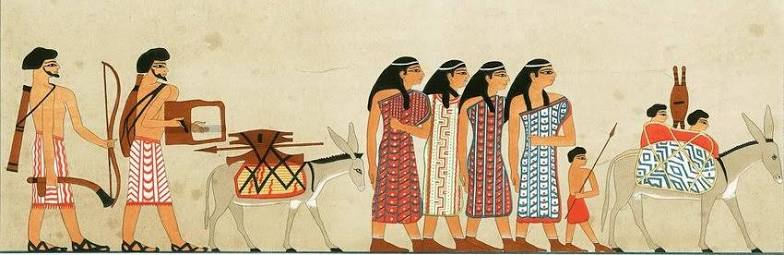
This information was taken from history books, and other historic documents, newspaper articles, Wikipedia and of course the most important of all books, the Bible. The blog you are about to read has been researched, organized, and laid out using information that may be offensive to some readers. These analysis were not gathered in judgment, malice or grievance toward any group or individual. This is esoteric information intended to assist the followers of “the way,” in discovering new data.
Are The Canaanites Descendants Of Ham (Cham, חָם)?
Ham is one of three sons of Noah who survived the great flood. The name Ham primarily means “hot,” or “warm,” in Hebrew. His wife, according to the Book of Jubilees, was Na’eltama’uk.
In the “Table of Nations” Genesis 10, Ham was the father of four sons: Cush (Ethiopia), Mizraim (Egypt), Put (Libya), and Canaan, (the Phoenicians and other inhabitants of the Levant, including the Babylonians, “Iraq” and the Persians, “Iran”).
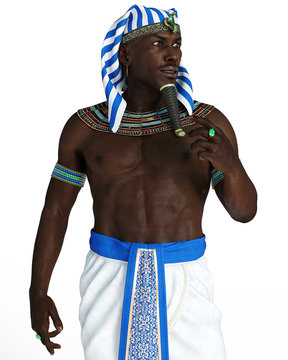
The name Kush, Cush (כּוּשׁ) translated to mean “black” or “dark,” represented more than Egypt, geographically it included the Nubian people (an indigenous ethnic group residing in modern-day Sudan and southern Egypt). The ancient Kingdom of Kush was centered in the Nile Valley of Nubia, and its modern-day descendants maintain a distinct cultural heritage, language, and connection to their historical roots.
When ancient Jewish scholars translated the Hebrew Bible into Greek/Latin (the Septuagint), they translated the word Cush directly as Aethiopia (Ethiopia). In ancient Greek, Aethiopia literally translates to “the land of the sunburned faces”
Did you know: Moses was adopted by an Egyptian, a daughter of Pharaoh, who was mentioned in 1st Chronicles 4:18? She was the one who pulled him from the waters of the Nile.
Did you also know: Arabization and Islamization began during the Arab conquest of Egypt, it was led by Amr ibn al-As between 639 and 642 CE. Over centuries, native Egyptians blended with Arab settlers, adopting the Arabic language and Islamic culture.
Today the descendants of the Phoenicians populate the coast of the Mediterranean, primarily Lebanon and Syria.
High levels of Phoenician DNA markers are also found in populations from Sardinia, Sicily, Malta, and Cyprus, stemming from ancient trading outposts.
The Sinites (another Lineage of Ham): Have been linked to the Chinese; from Sin (the Sinites), a grandson of Noah, through Ham’s son Canaan, (Genesis 10:15-17). This theory is explored in resources like Bible.org and ministries like Rush Creek Bible Church which connects the Biblical “land of Sinim” and historical terms like “Sinae” or the prefix “Sino-” to this Canaanite clan migrating eastward to (China).
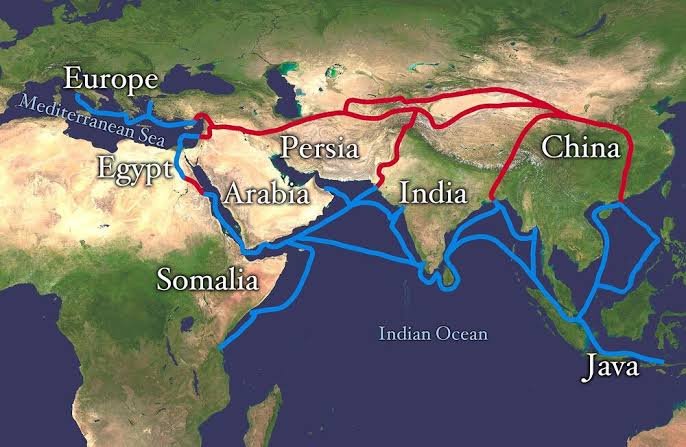
Many biblical commentators and historical revisionists suggest that the Sinites migrated far to the East, connecting them to the classical Sinae (the historical western name for the Chinese) and the biblical “land of Sinim” in Isaiah 49:12
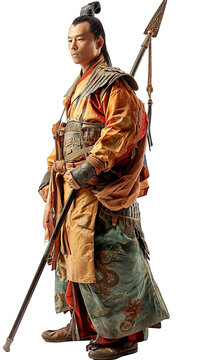
Revelation 16:12 The sixth one (angel) poured out his bowl on the great river Euphrates, and its water dried up, in order to prepare the way for the kings from the east (Most people believe this to be a geographical statement referencing China).
The English version of Revelation 16:12 reads, the sixth angel poured out his bowl on the great river Euphrates, and its water was dried up to prepare the way for the kings from the East, which most evangelist claim is China, but, the Greek version reads differently….
And the sixth poured out his bowl upon the river, the great Euphrates dried up, the water of it, so that it might be prepared, the way of the kings of the rising (anatolé) sun (Helios). Even though the Greek word, anatolé describes (the direction) east, the word Helios which was omitted in all English translations, was there too, in the Greek.
According to the Greek translation, these weren’t simply kings from the East, but kings of the rising Sun. The sun, which rises from the east, namely Helios, Christos (a title used by sun worshipers), or representatives of Christ- the- true- sun; (Christians)!
It would appear that many of these tribes eventually merged, intermarried, and/or intertwined through conquests and regional migrations, the Canaanite bloodline today is shared by many diverse populations that currently inhabit these regions.
The Bible Warnings of End Times Prophecies In This Region Confirms….
12 “The ten horns you saw are ten kings who have not yet received a kingdom, but who for one hour will receive authority as kings along with the beast. 13 They have one purpose and will give their power and authority to the beast. 14 They will wage war against the Lamb (Yehoshua), but the Lamb will triumph over them because He is Lord of lords and King of kings—and with Him will be his called, chosen and faithful followers.”
15 Then the angel said to me, “The waters you saw, where the prostitute sits, are peoples, multitudes, nations and languages. 16 The beast and the ten horns you saw will hate the prostitute (America/ Israel). They will bring her to ruin and leave her naked (exposed); they will eat her flesh (deplete) and burn her with fire. 17 For God has put it into their hearts to accomplish HIS purpose by agreeing to hand over to the beast their royal authority, until God’s words are fulfilled.
“Burn her with fire” could also mean to damage beyond repair.
18 The woman you saw is the great city (Washington D.C.) that rules over the kings of the earth.” Again, this is describing the great whore.
Canaan, Son Of Ham
Genesis; And Canaan begat Sidon his firstborn, and Heth, 16 And the Jebusite, and the Amorite, and the Girgasite, 17 And the Hivite, and the Arkite, and the Sinite, 18 And the Arvadite, and the Zemarite, and the Hamathite: and afterward were the families of the Canaanites spread abroad.…
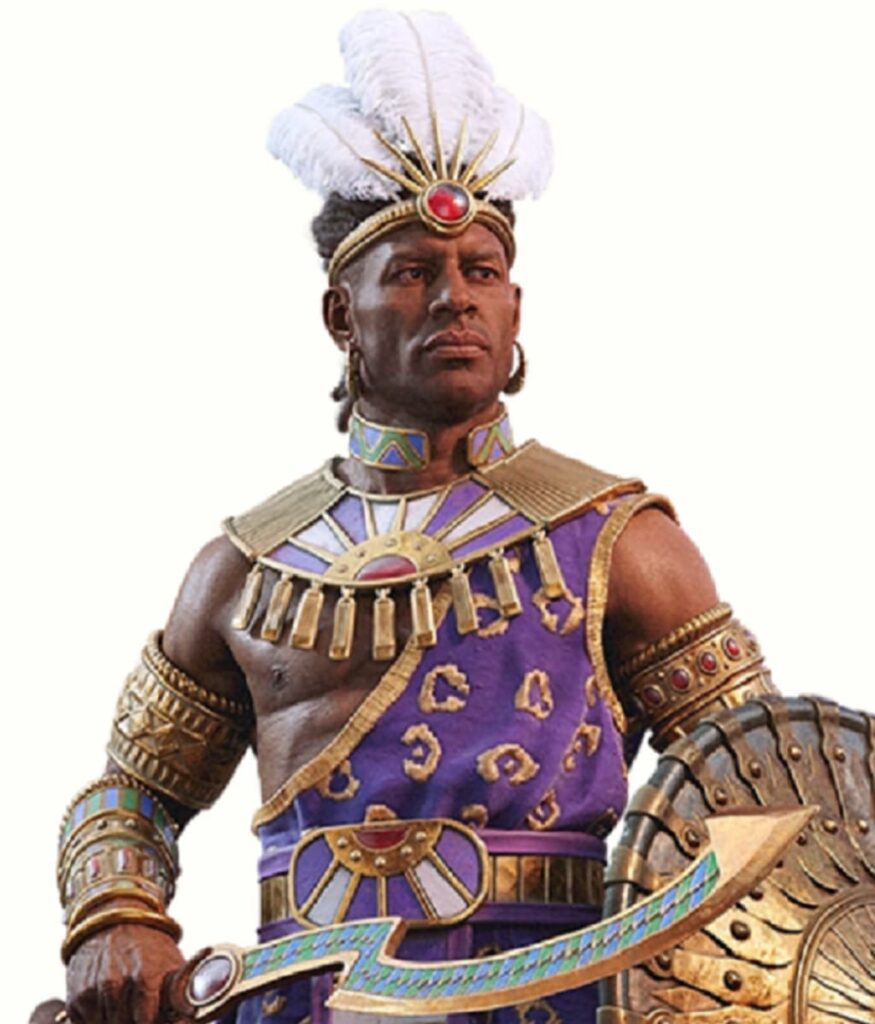
Historically, Canaan’s descendants (including the Sidonians, Hittites, Amorites, and Jebusites) assimilated into the broader populations of the Levant. Genetic and archaeological research shows that modern Lebanese, Palestinians, Syrians, and Jordanians became the direct descendants of the ancient Canaanites.
The name Canaan means to be “humiliated,” or “brought down low,” in Hebrew. It later came to mean merchant or trader, such as the evil “slave traders” of the middle ages, who trafficked the Yehudim in both the Trans- Saharan and Trans Atlantic Slave Trades.
Sidon (Canaan’s firstborn, was associated with the Phoenician city of Sidon in modern Lebanon)
Heth (Became ancestor of the Hittites)
The Amorites (Who famously founded the Old Babylonian Empire, with its most famous ruler King Hammurabi, who reigned c. 1792–1750 BCE, and was known for his influential law code)
The Girgashites (Gergesenes, Hellenes- Greeks)
The Hivites who were believed to be absorbed, assimilated, or dispersed into surrounding populations in the Levant by the end of the biblical era.
The Arkites (From the city of Arqa in Lebanon)
The Sinites (Associated with China)
The Arvadites (Island city of Arwad, Syria)
The Zemarites (Associated with Sumra, Syria) and the Hamathites (of Hamath, Syria)
According to Genesis, the Canaanites descended from Canaan, the son of Ham. Biblical narratives place them geographically across the Levant—from Sidon down to Gaza and Jordan, recording that despite conflicts and subjugation, many localized Canaanite groups (such as the Jebusites and Amorites) coexisted or integrated.
The origin of the tribe of the Jebusites is Jebus (Yəḇūs), the third son of Canaan (a son of Ham and grandson of Noah). Scripture introduces the clan as the ancient founders and inhabitants of Jebus, which later became known as Jerusalem (Yerushalayim).
Yerushalayim means city of Peace or “foundation of Peace.”
According to the Book of Genesis (10:8), Nimrod the son of Cush, grandson to Ham and great-grandson of Noah, was described as the founder and king of Babylon (Babel) and the surrounding cities in the land of Shinar.
Outside the Bible, historical records from Egypt and Mesopotamia show that Late Bronze Age Canaanites along the Mediterranean coast transitioned into the civilization known to the Greeks as the Phoenicians. As empires shifted (Assyrian, Babylonian and Persians), these city-state identities dissolved into the broader regional populace.
Historical continuity demonstrates that the tribal names (Amorites, Sidonians and Hittites of Canaan) were absorbed into the subsequent populations inhabiting the exact same geographical strip of land between the Mediterranean Sea and the Arabian desert.
Shem
In Hebrew, Shem (שֵׁם) directly translates to “name” or “fame/renown”. In biblical and traditional Hebrew, a name is much more than a simple label; it represents a person’s true identity, character, reputation, authority, and destiny.
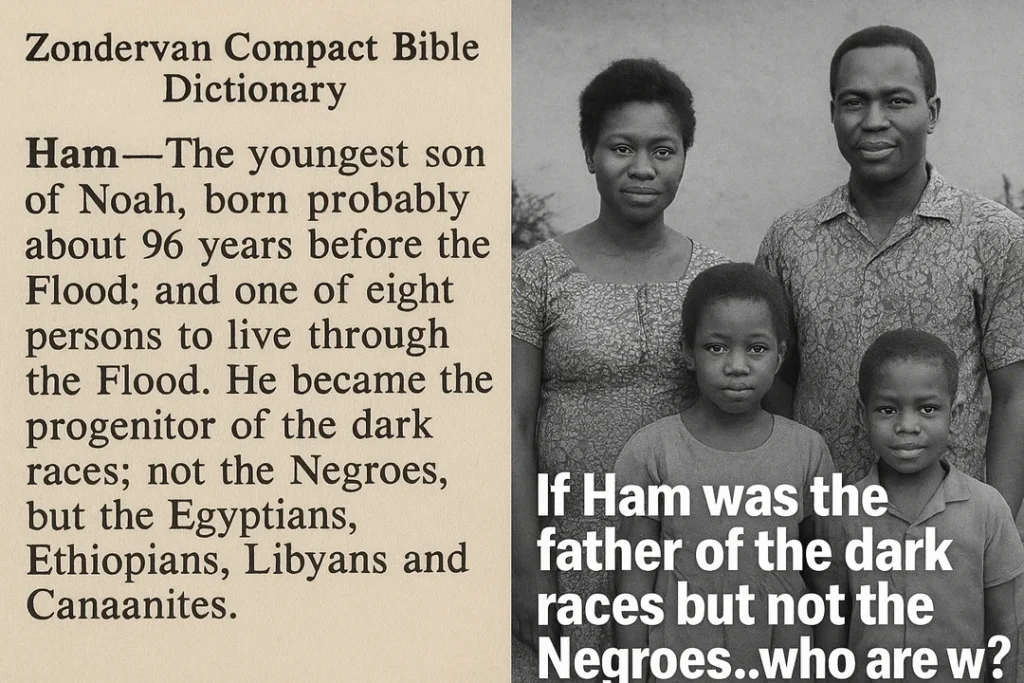
His wife was named Sedeqetelebab. Sedeqetelebab is an ancient Semitic name that means “righteousness of heart” or “pursuing righteousness.” Shem’s ancestral line became Yeshurun (Hebrew) today they are the Yehudim, which include the Lewi and Benyamin. The word “Semite” is derived from the name Shem.
- Immediate Sons: Elam, Asshur, Arphaxad, Lud, and Aram.
- Arameans, Moabites, and Edomites.
- Major Figures: Through Arphaxad, this line leads directly to Eber, Terah, and eventually Abraham, Isaac, Jacob, and YEHOSHUA.
The name Abraham means “father of a multitude,” or “father of many nations?” And Isaac (Yitzhak) means “he will laugh.”
Did you know: It was recorded in the book of Jasher, chapter 9, that Abraham went to the house of Noah and Shem at a young age and remained there for 39 years to be instructed by them?
Did you know: that Noah life likely overlapped with Abraham by about 58 years?
Arphaxad, (a son of Shem) direct descendants included Shelah, Eber, and Peleg, forming the ancestral line that ultimately led to Abraham. According to biblical genealogies in Genesis and 1st Chronicles, he fathered this patriarchal lineage in post-flood Mesopotamia.
Simeon (a disciple of Yeshua) was called “Niger” in Acts 13:1 because Niger is the Latin word for “black.” Scholars generally agree that this was a descriptive Latin nickname or cognomen referring to his dark complexion or African descent.
Did you know: that Paul was mistaken for an Egyptian and that Egyptians, Yehudim and Ethiopians were all similar looking during this time. It appears that Paul’s appearance was the reason his ability to speak Greek was questioned by the guard in Acts 21:37.
As he was about to be brought into the barracks, Paul said to the commander, “Am I allowed to say something to you?” He replied, “You know how to speak Greek?”
Many people use Acts 21:38 as a reference, where this same Roman commander mistakes Paul for an Egyptian revolutionary who had recently stirred up a revolt.
38 “Aren’t you the Egyptian who started a revolt and led four thousand terrorists out into the wilderness some time ago?”
The Northern Kingdom Were Carted Off Into Slavery By The Assyrian Empire 723 BCE!
(The Twelve Tribes Of Yaakov)
Deuteronomy 28:64-65 And the LORD will scatter thee among all the people, from the end of the earth even unto the other; and there thou shalt serve other gods, which neither thou nor thy fathers have known, even wood and stone (describing the cross, Mary, and Jesus). 65) and among these nations shalt thou find no ease, neither shall the sole of thy foot have rest: but the LORD shall give thee there a trembling heart, and failing of eyes, and sorrow of mind:
Eventually, the Southern Kingdom were also carried away by Berber and Tuareg desert nomads who controlled the caravan routes, and the North African Arab and Muslim merchant networks in Mediterranean urban centers.
Later what was left of the Yehudim were completely overwhelmed by the British Empire and other European nations around 1560 CE.
Did you know: According to Genesis 28:9, Esau married one of the daughters of Ishmael named Mahalath (also referred to as Basemath in Genesis 36:3), she was the sister of Nebaioth and the granddaughter of Abraham. This was in addition to his many Canaanite wives.
Did you also know: A Roman historian, Publius Cornelius Tactitus wrote, ”Many assure us that the Jews are descended from those Ethiopians who were driven by fear and hatred to emigrate from their home country when Cepheus was king. There are some who say that a motley collection of landless Assyrians occupied a part of Egypt, and then built cities of their own, inhabiting the lands of the Hebrews and the nearer parts of Syria”– Tacitus, Histories 5.2-5
Tacitus, wrote about Jews (the Yehudah) in his book, The History, saying, “Many assure us they were a race of Ethiopian origin.” The History, Book V, chapter 2.
Tacitus appeared to be a firm believer in Roman paganism but, he was also a witness from the late first and early second century, who described the Yehudim (Jews) as originating from ancient Ethiopia (literally describing Black people).
The Descendants Of Shem Were A Dark People,
Many people point out in Exodus 2:19 that the Egyptian women mistook Moses for an Egyptian. Ancient Egyptians at that time (c. 1592 BCE) had dark skin, many theologians argue Moses had a dark complexion.
Some modern theological commentaries and regional traditions suggest that Mary, mother of John Mark (the author of the Book of Mark) had family roots or connections in North Africa (either Cyrene or Libya).
Did you know: Africa plays a foundational role in biblical history. Landmark events—such as the exile of the Israelites, the birth of Moses, and the early childhood refuge of Yehoshua—all occurred in Egypt. Kush (modern-day Sudan) and Sheba (often linked to Ethiopia or Yemen) are also explicitly prominent throughout the text.
The region of Canaan, where the tribes eventually settled, existed during the Bronze Age and Iron Age, long before the modern state of Israel was founded, which reveal that Canaan occupied the physical land where ancient and modern Israel is located.
Japheth
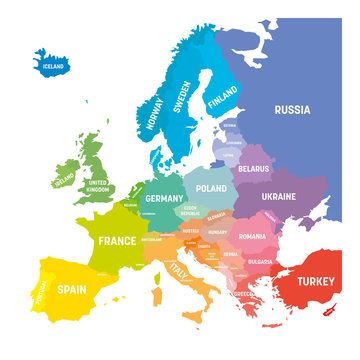
Japheth, also one of Noah’s three sons in the Bible, alongside Shem and Ham, was named as the ancestor of the maritime and European peoples. Historian al-Tabari records his wife was Arbasisah, daughter of Marazil. He is traditionally viewed as the ancestor of the European people and parts of Asia. Japheth, is from the Hebrew word meaning enlargement.
His biblical role and story,
His descendants are traditionally associated with the maritime nations, coastlands, and the Indo-European peoples spread throughout Europe, the Caucasus, and parts of Asia.
His sons were…
Gomer: Father of Ashkenaz, Riphath, and Togarmah.
Magog: (Russia) Associated with the northern lands and tribes.
Madai: Associated with the Ancient Medes.
Javan: Father of Elishah, Tarshish, Kittim, and Rodanim (linked to Greek and maritime regions).
Tubal: (Turkey) Associated with regions in Anatolia and near the Black Sea.
Meshech: Often grouped with Tubal in ancient texts. Whether Meshech is Russia remains up for debate.
Tiras: Was associated with early seafaring or northern groups.
Ashkenaz, the first son of Gomer, (grandson of Japheth) was historically linked to ancient peoples near Ararat and Minni (modern-day Turkey/Armenia region), the name was later used by medieval rabbis to designate Germany, giving rise to the term Ashkenazi Jews.
(Figuratively) Gog of the land of Magog, was an evil leader from the far north.
Gog is a specific hostile figure (spirit) —reflected in Ezekiel 38 and 39 as either a supreme human leader/prince from the far north, or a symbolic representation of many evil nations (or forces) — who will ultimately be defeated by divine intervention. Many Theologians have affiliated Gog and Magog with Russia. Though this cannot be proven, I can say that Russia is about as far north from Israel as you can get.
Many biblical commentators and historical geographers traditionally link Riphath to Russia through the ancient Riphaean Mountains.

Did you know: Ashkenaz was used in medieval Hebrew texts to mean Germany or Central/Eastern Europe? The origin of the term “Ashkenazi,” was used for Jewish communities of Western, Central, and Eastern European descent.
The Ashkenazi Jew Connection
According to Tia Ghose’, in her NBC article; Most Ashkenazi Jews are genetically Europeans, surprising study finds…..
Though the findings may seem intuitive, it contradicts the notion that European Jews mostly descended from people who left Israel and the Middle East around 2,000 years ago.
Instead, a substantial proportion of the population originates from local Europeans who converted to Judaism, said study co-author Martin Richards, an archaeogeneticist at the University of Huddersfield in England.
Richards and his colleagues analyzed mitochondrial DNA, which is contained in the cytoplasm of the egg and passed down only from the mother, from more than 3,500 people throughout the Near East, the Caucusus and Europe, including Ashkenazi Jews.
The team found that four founders were responsible for 40 percent of Ashkenazi mitochondrial DNA, and that all of these founders originated in Europe. The majority of the remaining people could be traced to other European lineages.
All told, more than 80 percent of the maternal lineages of Ashkenazi Jews could be traced to Europe, with only a few lineages originating in the Near East.
Revelation 18:2 And he called out with a mighty voice, “Fallen, fallen is Babylon the great!
She has become a dwelling place for demons,
a haunt for every unclean spirit,
a haunt for every unclean bird,
a haunt for every unclean and detestable beast. 3 For all nations have drunk
the wine of the passion of her sexual immorality, and the kings of the earth have committed immorality with her,
and the merchants of the earth have grown rich from the power of her luxurious living.”
Did you know: Benjamin Netanyahu is an Ashkenazi Jew, with Eastern European ancestry from Poland? His paternal family name was originally Mileikowsky before his family migrated from Warsaw to British-controlled Palestine and changed it.
Netanyahu has stated that family DNA testing and genealogical research indicate a distant Sephardic branch tracing back to Spanish or Iberian roots, though his immediate heritage is widely recognized as Ashkenazim.
Shakas (Indo-Scythians): Iranian nomadic tribes that moved from Central Asia into Gandhara and the Indus Valley (modern-day Pakistan) around the 2nd to 1st century BCE, establishing a loose rule that blended in with local South Asian traditions.
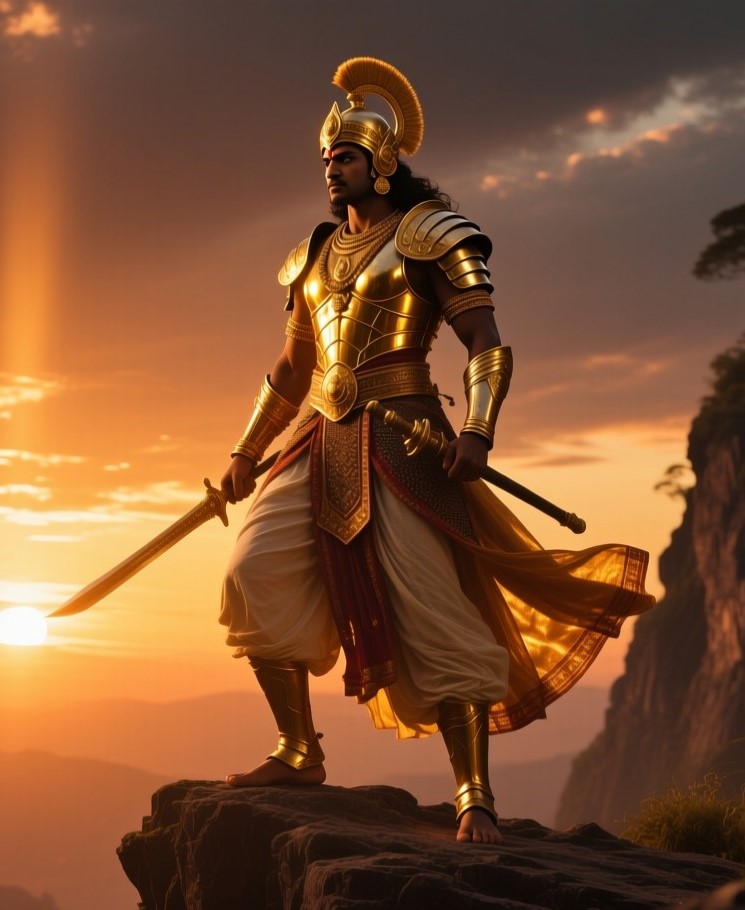
In the Bible, the Scythians were traditionally considered descendants of Japheth, one of Noah’s three sons. Biblical commentators trace many northern and nomadic non-Israelite nations back to Japheth’s lineage. (Eastern Iranians, modern-day Ukraine and Southern Russia)
The Scythians were named once in the New Testament in Colossians 3:11, where the Apostle Paul notes that in Messiah there is no “Greek nor Jew, circumcised nor uncircumcised, Barbarian, Scythian, bond nor free.”
In this verse, “Scythian” is used to represent people considered furthest from Greek and Roman civilization, highlighting that “the Way” is an availible possibility to all who follow YEHOSHUA!
After the floodwaters receded and the ark rested on the mountains of Ararat, Noah built an altar to worship God. God established a covenant with him, promising never to destroy the earth with a flood again, and set the rainbow as the sign.
- The New Testament lifts up Noah as an example of faith. The author of Hebrews (11:7) notes that his holy fear and faith in things unseen condemned the wicked world, while Peter refers to him as a “herald of righteousness”.
